Beautiful Daisy Flowers Redwork Design
A Designer’s Real-World Review for Personalized Gift Makers
As an embroidery designer who’s shipped over 3,000 custom gift orders—from baby blankets stitched for first birthdays to wedding keepsakes framed in linen boxes—I tested Beautiful Daisy Flowers Redwork Design with one question in mind: Will this design earn trust, not just attention? The answer? Yes—but only when paired with thoughtful execution. This isn’t just another single flower motif. It carries the quiet confidence of redwork tradition—clean lines, intentional negative space, and a gentle rhythm that reads as handmade, not mass-produced.
Mood & First Impressions: Sweet, Timeless, and Surprisingly Versatile
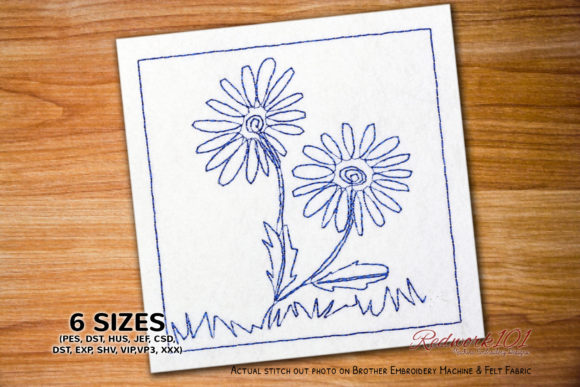
The moment you open the file, Beautiful Daisy Flowers Redwork Design feels like a breath of spring air—light but grounded. It’s not fussy or overly detailed; instead, it leans into simplicity with confident stem curves, open petal shapes, and subtle leaf accents. There’s no filler stitching, no dense fills—just line work that honors the redwork heritage while feeling fresh enough for modern nurseries or minimalist wedding towels. Customers drawn to handmade product authenticity will instantly recognize its sincerity. It reads as romantic without being saccharine, classic without feeling dated, and sweet without leaning into cutesy.
Where This Design Truly Shines
Beautiful Daisy Flowers Redwork Design is a quiet powerhouse across personalized gift categories:
- Baby embroidery: Perfect for onesies (on stable knit blends), swaddle blankets, and milestone pillows—especially when paired with soft pastel thread colors. Its open structure avoids bulk on delicate fabrics.
- Wedding gifts: Embroidered on linen napkins, cotton tea towels, or muslin pouches, it adds heirloom warmth without competing with monograms or dates.
- Nursery decor: Works beautifully on crib sheets (flat-stitched panels), wall hangings, and wooden toy storage bins—its scale holds up at 3–4 inches wide.
- Everyday handmade products: Think aprons for bakeries, canvas tote bags for boutique shops, and pillow covers for Etsy sellers curating “slow living” collections.
- Custom order previews: Because it stitches cleanly and photographs well—even on textured fabric—it builds buyer confidence before production begins.
Where to Use It Thoughtfully
This design earns high marks for charm, but it’s not universally forgiving. Here’s where intention matters:
- Small lettering or fine details: Avoid adding tiny text inside petals or stems—the redwork style doesn’t support micro-detail. Let the daisy breathe.
- Textured or thick fabric: On heavy terry cloth towels or quilted blankets, test stitch density first. Dense areas may pucker if stabilizer isn’t matched to weight.
- Stretchy baby clothes: Skip tight-knit bodysuits unless using lightweight cutaway stabilizer and reduced tension. Stick to stable cotton or bamboo blends.
- Curved surfaces: Not ideal for mugs or rounded cosmetic bags—stick to flat or gently contoured items like tote bases or pillow fronts.
- Dark fabric: Redwork traditionally uses red thread on white, but this design adapts well to navy or charcoal—if you confirm thread contrast in your printable mockup first.
- Frequent-wash items: For embroidered towels or kitchen linens, use high-quality polyester thread and lock stitches securely. Wash-test a sample before batch production.
Why It Elevates Giftability—and Customer Trust
Personalized gift buyers don’t just buy embroidery—they buy meaning, care, and perceived craftsmanship. Beautiful Daisy Flowers Redwork Design delivers that quietly. Its clean lines photograph beautifully on Etsy listings, its modest scale invites customization (add a name, date, or tiny heart nearby), and its redwork roots whisper “handmade with intention.” When customers see it on a nursery pillow or wedding towel, they don’t think “machine-made”—they think “someone chose this *for us*.” That emotional connection translates directly to reviews, repeat orders, and word-of-mouth referrals.
Practical Embroidery Notes Every Maker Should Follow
Before stitching your first customer order, do these five things:
- Test on scrap fabric that matches your intended product—same weave, weight, and stretch.
- Check thread color contrast under natural light *and* phone flash. Redwork relies on clarity—not just hue.
- Confirm hoop size compatibility. If the outer Box Stitch is included (as noted in the description), decide whether to include it—or skip it—to suit your product’s aesthetic.
- Review stitch density in your embroidery software. Look for long satin runs or thin connecting lines that may snag during washing.
- Use proper stabilizer: tear-away for stable cottons, cutaway for knits or towels, and water-soluble for delicate lace overlays.
Also: compare light and dark fabric mockups side-by-side, inspect small details after stitching (petal tips, stem joins), and always verify commercial licensing terms before selling finished products. Since this falls under Single Flowers and Embroidery, confirm whether the license permits resale of physical goods—not just digital files.
Final Thoughts for Small Shop Owners & Digital Sellers
If you’re an Etsy seller building a cohesive brand around nature-inspired handmade product, or a baby product creator seeking embroidery that feels tender but timeless, Beautiful Daisy Flowers Redwork Design is worth more than its file size. It’s adaptable, emotionally resonant, and technically respectful of both machine and maker. It won’t shout—but it will linger in memory, on a blanket, on a towel, on a gift tag tied with twine. And in the world of personalized gifting, that kind of quiet staying power? That’s how small shops become beloved ones.