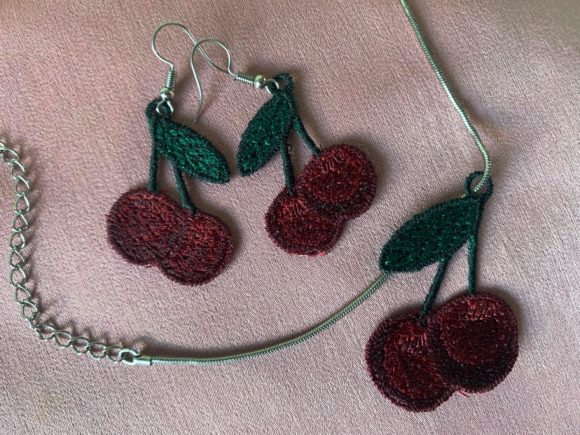
Cherry Earrings and Pendant
A Sweet, Seasonal Touch for Personalized Gift Makers
As an embroidery designer who’s tested hundreds of digital embroidery files for small shops and handmade sellers, I approached the Cherry Earrings and Pendant design with a mix of curiosity and caution. It’s easy to dismiss fruit motifs as “cute but forgettable”—but this set surprised me. From the first glance at the file preview, it radiates summer warmth without tipping into kitsch. The cherries are plump, glossy, and softly dimensional—achieved through thoughtful satin stitch layering and subtle stem detailing. There’s a gentle romanticism here, balanced by clean outlines that keep it modern enough for wedding keepsakes or minimalist nursery decor. It doesn’t scream “trendy”; instead, it feels like a quiet heirloom-in-waiting—sweet, sincere, and quietly elegant.
Where This Design Truly Shines
The Cherry Earrings and Pendant isn’t just for jewelry—it’s a versatile anchor for heartfelt personalization. For baby embroidery, it adds tenderness to onesies (when placed on stable fabric), burp cloths, or organic cotton swaddle blankets—especially when paired with a monogram or birth date in a soft script. Wedding gift designers will appreciate how effortlessly it elevates linen pillow covers for the couple’s suite or embroidered kitchen towels gifted to newlyweds. I’ve already sketched mockups for a blush-pink tote bag with one cherry nestled beside a hand-stitched “Mr. & Mrs.”—ideal for bridal party gifts or rehearsal dinner favors.
Etsy sellers and craft fair vendors can lean into its seasonal charm: pair it with vintage-style printable mockups for summer listings (“Cherry-Picked for You”), or use it on aprons for farmers’ market vendors or boutique bakeries. As a personalized gift, it connects emotionally—not because it’s flashy, but because it evokes memory: childhood summers, backyard trees, shared desserts. That resonance boosts perceived value and customer trust, especially when buyers see consistent, polished stitching in your product photography.
Thoughtful Placement Matters
Like any refined machine embroidery design, the Cherry Earrings and Pendant rewards intentionality. Avoid placing it on highly textured fabrics (like heavy terry cloth or bouclé) where fine stem lines may blur. Thick embroidered towels benefit from reduced stitch density—test first. Stretchy baby clothes? Not ideal unless stabilized with cutaway + topping; the cherries’ curves demand stability. Curved surfaces—think ceramic mugs with embroidered sleeves or contoured pillow covers—require careful hooping and possibly repositioning to prevent distortion.
Dark fabric demands attention: verify thread color contrast in your digital embroidery file preview. What reads as rich green on screen may vanish on navy linen without adjusting fill density or adding underlay. And while the design is joyful, it’s not inherently “baby-themed”—so avoid assumptions. A new parent might choose it for its simplicity and freshness, not fruit symbolism. Let your product description guide that story.
What Makes It Stand Out on Etsy & Small Shop Shelves
In a crowded marketplace, the Cherry Earrings and Pendant helps handmade sellers differentiate. Its dual-purpose structure (earrings + pendants) signals versatility—customers see more than one use, which lifts average order value. When featured in lifestyle photos—a cherry-embroidered linen napkin beside fresh fruit, or a tiny pendant stitched onto a baby blanket corner—it sparks imagination. That visual storytelling drives buyer engagement far more than technical specs alone.
For wedding gift designers, it offers quiet sophistication: no lace, no glitter, just botanical sincerity. For nursery decor creators, it fits seamlessly into woodland, modern farmhouse, or Scandinavian palettes. And because it avoids overt gender coding, it works across audiences—perfect for inclusive gifting.
Practical Embroidery Notes Every Maker Should Follow
Before stitching your first finished product, run these checks:
- Test on scrap fabric—especially if using rayon or metallic threads, which behave differently on cotton vs. linen.
- Confirm hoop size compatibility. Does your machine handle the largest cherry motif comfortably? If not, resize proportionally—but never stretch vertically/horizontally.
- Review stitch density. Overly dense fills on small cherries can cause puckering on lightweight fabrics. Lighten underlay or reduce satin stitch width if needed.
- Choose stabilizer wisely: tear-away for stable wovens, cutaway for knits or delicate silks, and water-soluble topping for dense stitches on napped fabrics like terrycloth.
- Compare light and dark fabric mockups side-by-side. Adjust thread colors or add outline stitches if details fade.
- Inspect small details post-stitch: stems, highlights, and berry dimples should read clearly—not muddy or flattened.
- Verify commercial licensing. Since you’re selling finished items (not the file itself), ensure the license permits commercial embroidery and covers your intended scale—local craft fairs, Etsy, or wholesale.
Final Thoughts for the Handmade Seller
The Cherry Earrings and Pendant isn’t just another embroidery file. It’s a quiet invitation—to slow down, celebrate simple abundance, and make something meaningful. Whether you’re stitching a custom apron for a local chef, a keepsake blanket for a newborn, or a limited-run tote for a summer pop-up, this design carries emotional weight without demanding attention. It supports your brand voice rather than overriding it.
For baby product creators, it adds gentle personality without overwhelming. For wedding gift designers, it whispers romance without cliché. For Etsy sellers, it photographs beautifully—and that matters. In a world of mass-produced goods, a thoughtfully embroidered cherry says, “I chose this for you.” That’s the heart of the handmade product. And that’s why the Cherry Earrings and Pendant earns a permanent spot in my personal library of trusted personalized gift designs.