Smiling Donkey Head Redwork
A Warm, Whimsical Anchor for Holiday Collections
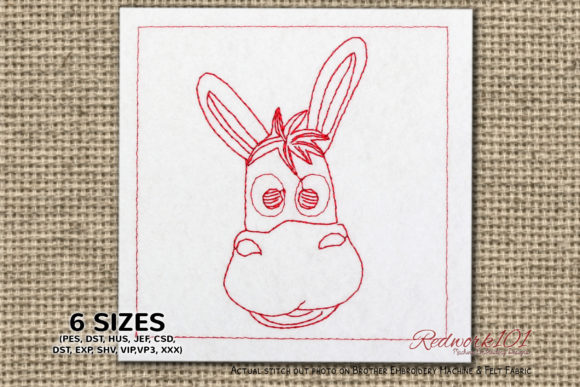
As an embroidery designer who’s built seasonal product lines for over a decade—from farmhouse kitchen towels to family matching sweatshirts—I immediately felt the quiet charm of Smiling Donkey Head Redwork. It’s not flashy or overly festive, but that’s its strength. This design lands firmly in the cozy, nostalgic, and gently playful zone—think rustic Christmas mornings, spring baby showers, Easter brunch table linens, or summer farm-themed craft fairs. Its redwork style evokes hand-stitched tradition, while the donkey’s soft smile adds approachable warmth. Unlike bold wildlife motifs that read as decorative or symbolic, this one feels personal—like a quiet nod to kindness, resilience, or gentle humor. That emotional resonance is gold for handmade gift makers and Etsy sellers aiming for heartfelt, not just holiday-adjacent.
Where It Shines: Real-World Seasonal Applications
Smiling Donkey Head Redwork is remarkably versatile across product types—and that versatility directly supports stronger holiday sales. On sweatshirt embroidery, it reads beautifully at 3.5–4 inches wide: large enough for visual impact, small enough to avoid overwhelming relaxed-fit fabric. Paired with cream or heather gray fleece, it becomes a standout piece in family matching sets—especially when offered alongside coordinating tote bag design and kitchen towel embroidery options. For pillow cover collections, the clean line work holds up well on linen-cotton blends, and its modest scale means it won’t compete with busy prints or textured weaves. As a embroidered patch, it lends instant character to denim jackets or canvas aprons—ideal for craft fair booths where tactile, story-driven items draw longer停留 and higher conversion.
It also excels in gifting contexts. A set of three embroidered ornaments—donkey head, carrot, and “Home Grown Joy” script—feels cohesive and intentional. As a personalized gift, it pairs elegantly with monogrammed baby blankets or toddler bibs (just confirm thread safety for infant use). For social media previews and printable mockup assets, its strong silhouette ensures clarity even at thumbnail size—critical during peak holiday scrolling. And because it’s rooted in the Wild Animals category but avoids cliché, it stands out in crowded Etsy listings without needing aggressive keyword stuffing.
Where to Proceed Thoughtfully
Like any thoughtful machine embroidery design, Smiling Donkey Head Redwork has natural boundaries. Its charm lies in simplicity—but that means fine details (like eyelashes or subtle shading) may blur on dense fabrics. Avoid using it on thick terry cloth kitchen towel embroidery unless you’ve tested stabilizer layers thoroughly; excess bulk can distort the clean redwork lines. On dark fabric, test thread colors carefully—the classic red may mute or shift tone without proper underlay or high-contrast bobbin thread. Likewise, skip metallic thread unless you’re confident in your machine’s tension control; redwork relies on crisp stitch definition, and metallics can fray or skip on tight curves.
Don’t push it into tiny applications. While charming at 2.5 inches, it loses legibility below that—so skip micro-embroidery on baby socks or curved cap fronts unless you have a verified hoop size and digitizing revision. Also, be mindful of stitch density: if the design includes optional elements like the Box Stitch shown in the preview image, assess whether that outer frame adds value—or visual clutter—on lightweight apparel like rayon-blend scarves or cotton poplin napkins. When in doubt, omit it. Simplicity serves seasonal buyers best.
Building Trust, Value, and Recognition Through Design Choice
Choosing Smiling Donkey Head Redwork isn’t just about aesthetics—it’s a strategic signal to your customer. In a sea of generic snowflakes and glittery reindeer, this design quietly communicates craftsmanship, intention, and emotional intelligence. That builds customer trust faster than any banner ad. Buyers recognize authenticity: they see a handmade gift that feels curated, not mass-produced. That perception lifts perceived value—allowing small shop owners to price thoughtfully, not competitively.
For brand consistency, this design slots seamlessly into earth-toned, linen-textured, or vintage-inspired palettes. Pair it with olive, oat, terracotta, or deep burgundy threads—and you’ve got a cohesive seasonal embroidery collection that works year-round (think Easter, Mother’s Day, fall harvest, even quiet winter solstice themes). Visually, its distinct profile aids visual recognition across platforms: on Instagram carousels, printed tags, or packaging inserts, customers begin to associate that smiling donkey with your shop’s warmth and care.
Practical Designer Notes Before You Stitch
- Always test thread colors on both light and dark fabric swatches—redwork reds behave differently on black duck cloth versus ivory linen.
- Confirm hoop size and maximum design width before digitizing adjustments or bundling with other digital embroidery files.
- Use cutaway or tear-away stabilizer based on fabric texture: medium-weight cutaway for knits, lightweight tear-away for stable wovens like quilting cotton.
- Create realistic printable mockups—not just white backgrounds—showing the design on actual product types (e.g., folded tea towel, front-of-sweatshirt, corner of pillow cover).
- Review stitched samples closely: check for thread nesting, puckering at curves, and clarity of the smile’s arc—small details define emotional impact.
- Plan your matching color palettes early: choose 3–4 supporting thread colors to extend the design into complementary products (e.g., carrot orange, hay yellow, barn red).
- Verify commercial embroidery licensing before listing finished products—especially for Etsy sellers and small business owners selling physical goods.
In short, Smiling Donkey Head Redwork isn’t just another embroidery file. It’s a seasonal storytelling tool—one that invites connection, supports thoughtful product building, and helps handmade creators stand out with sincerity, not saturation. Use it with intention, test with care, and let its quiet joy do the talking.