Farmhouse in Hills Redwork Design
A Seasonal Designer’s First Impression
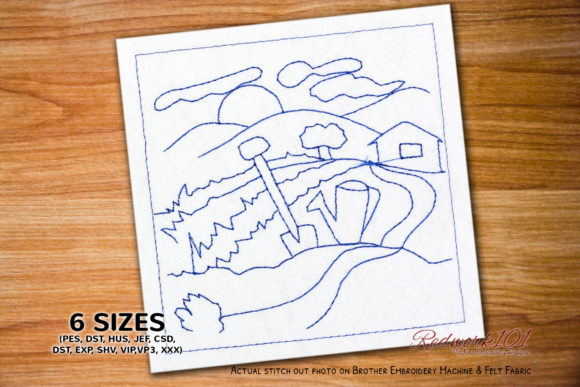
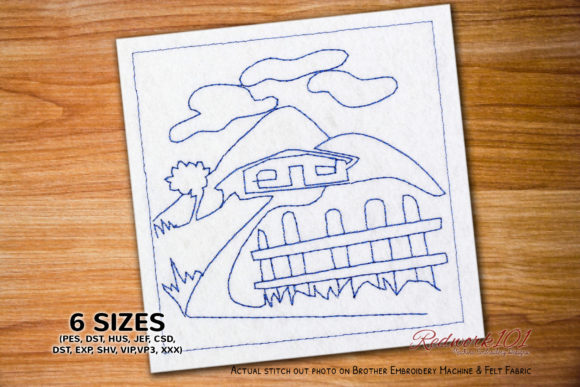
As an embroidery designer who’s curated over 200 seasonal collections for Etsy sellers and small-batch apparel brands, my first glance at Farmhouse in Hills Redwork Design lands right where holiday shoppers linger: in that warm, grounded space between nostalgia and quiet celebration. It’s not flashy—it’s deeply rustic, softly nostalgic, and emotionally resonant. The redwork style immediately signals heritage, hand-stitched care, and timeless Americana—perfect for autumn harvests, Thanksgiving gatherings, Christmas farmhouse décor, and even spring garden celebrations. There’s no clutter, no forced festivity. Just clean lines, gentle hills, a centered farmhouse silhouette, and intentional negative space that breathes on fabric. It feels cozy—not cutesy—and premium—not generic.
Where This Design Shines in Real Holiday Product Lines
Farmhouse in Hills Redwork Design is a versatile anchor for multiple high-conversion product categories. On heavyweight cotton sweatshirts or crewneck tees, it reads beautifully at 4–5 inches wide—ideal for family matching sets (think “Grandma’s Farmhouse,” “Our Little Harvest,” or personalized initials beneath the roofline). As a tote bag design, it balances utility and charm for farmers’ market shoppers and holiday gift bags. For kitchen towel embroidery, its moderate detail holds up through repeated washing without fraying or bleeding—especially when stitched with quality 40-weight rayon or polyester thread.
This design also elevates pillow covers and table linens with subtle sophistication—no need for glitter or bells to signal “seasonal.” As an embroidered patch, it works flawlessly on denim jackets, aprons, or baby bibs, reinforcing brand cohesion across a small shop’s holiday collection. And for ornaments or gift-ready products, its clean outline and balanced proportions translate crisply into printable mockups and social media previews—driving clicks and saves during peak holiday browsing.
Smart Placement & Practical Limitations
While Farmhouse in Hills Redwork Design performs strongly across most applications, thoughtful placement matters. Avoid using it on curved surfaces like baseball caps unless you’ve tested hoop stability and fabric stretch—redwork’s linear clarity can distort on tight curves. On thick terry cloth towels or heavy linen table runners, confirm your stitch density isn’t too high; overly dense fills may cause puckering or stiffening. Similarly, skip metallic thread unless you’re doing a limited test run—redwork’s charm lies in matte texture and soft contrast.
The optional box stitch shown in some versions? Use it intentionally—not automatically. When used as a framing device on light fabric, it adds polish. But on dark fabric or busy prints, omit it entirely (as noted in the product description: *“you can skip the color directly”*). Also, avoid scaling this design below 3 inches wide—fine roofline details and hill contours risk blurring on small hoop sizes or tightly woven fabrics like twill or poplin.
Emotional & Commercial Impact During Holiday Seasons
Holiday buyers don’t just purchase designs—they buy feeling. Farmhouse in Hills Redwork Design taps into deep-rooted associations: homecoming, generational continuity, simplicity amid chaos. That emotional resonance lifts perceived value, increases giftability, and builds trust—especially for handmade gift buyers seeking authenticity over mass production. On Etsy listings, it supports strong visual recognition across thumbnails and banners, helping your shop stand out in crowded search results for terms like *farmhouse holiday embroidery*, *seasonal embroidery file*, or *personalized gift for mom*.
For small shop owners building brand consistency, this design pairs effortlessly with neutral palettes—cream, charcoal, sage, brick red, oatmeal—making it easy to coordinate across sweatshirt embroidery, pillow covers, and embroidered patches. And because it avoids overt religious or commercial symbols, it remains inclusive and widely appealing across fall, Thanksgiving, Christmas, and early winter markets.
Designer Notes You Can’t Skip
- Test thread colors on both light and dark fabric—redwork traditionally uses red thread, but burnt sienna, navy, or forest green can deepen seasonal appeal without losing legibility.
- Check stitch density before bulk production. If your embroidery software shows excessive underlay or fill density, simplify where possible—especially for kitchen towels and baby items.
- Confirm hoop size compatibility for your target products. A 5x7 hoop comfortably fits the full design; smaller hoops may require strategic cropping (e.g., just the farmhouse + roofline for minimalist baby onesies).
- Use appropriate stabilizer: medium-weight cutaway for knits and stretchy garments; tear-away for stable wovens like cotton towels and pillow covers.
- Create realistic mockups—not just flat PNGs. Show how Farmhouse in Hills Redwork Design looks on a folded kitchen towel, draped over a wooden chair, or stitched onto a cream-colored tote in natural light.
- Review small details after stitching: ensure rooflines are crisp, hill contours aren’t lost in thread pull, and outer edges remain smooth—especially if skipping the optional box stitch.
- Plan matching color palettes across your holiday line. If you’re using this as a centerpiece, carry one accent color (like barn-red or olive) into coordinating ribbon, tags, or packaging.
- Verify commercial licensing before selling finished products. As a digital embroidery file, Farmhouse in Hills Redwork Design must be cleared for commercial embroidery use—don’t assume personal-use licenses cover Etsy sales or craft fair inventory.
Final Thought for Sellers Building Meaningful Collections
This isn’t just another machine embroidery design. Farmhouse in Hills Redwork Design is a quiet invitation—to slow down, gather close, and celebrate the ordinary moments that define our seasons. For Etsy sellers, handmade gift makers, and small shop owners, it’s a rare blend of versatility, emotional clarity, and timeless execution. When paired with intentional product planning, thoughtful thread choices, and authentic presentation, it doesn’t just sell—it connects. And in holiday shopping, connection is what turns a scroll into a sale, a buyer into a repeat customer, and a seasonal drop into a beloved tradition.