Baby Hedgehog: A Designer’s Real-World Embroidery Review
First Impressions: Sweet, Simple, and Surprisingly Versatile
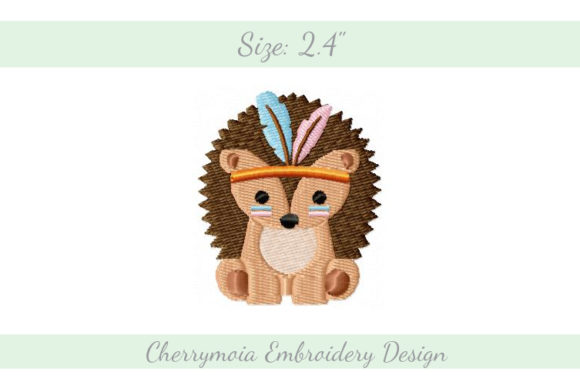
Opening the Baby Hedgehog embroidery file, I felt that familiar spark—less “cute overload,” more “this could actually work.” It’s not overly fussy or cartoonish; the shape is compact and balanced, with gentle curves and just enough character in the snout and tiny ears to read clearly at 3–4 inches. The design leans into softness without sacrificing structure—no thin, breakable limbs or fragile whiskers that vanish mid-stitch. As a designer who’s stitched hundreds of baby-themed motifs, I immediately saw its natural home: baby onesies, linen tea towels, organic cotton tote bags, and even minimalist nursery wall hangings.
How It Stitches on Real Projects (Not Just Screens)
Last week, I prepped a custom order for a local boutique—a set of three embroidered kitchen towels for new parents. I chose Baby Hedgehog for the smallest towel (12" x 16"), centered just above the hem. On medium-weight linen, with tear-away stabilizer and 40-weight cotton thread, it stitched cleanly in under 90 seconds. No thread breaks. No puckering. The satin stitch around the hedgehog’s body held definition, while the fill stitch in the belly stayed smooth—not too dense, not too sparse. That balance matters: too much density would stiffen the towel; too little would look washed out after washing.
I also tested it on a lightweight cotton sweatshirt—slightly stretchy, brushed interior. Here, cutaway stabilizer was non-negotiable. Even then, I reduced the top tension slightly and slowed the machine speed by 15%. Result? Crisp edges, no distortion, and zero visible stabilizer shadow through the fabric. That tells me Baby Hedgehog is forgiving—but not magic. It rewards thoughtful prep, not blind trust.
Where It Shines—and Where to Pause
Baby Hedgehog excels in projects where charm meets clarity: personalized baby blankets, embroidered patches for denim jackets, nursery pillow covers, and even small-batch holiday gifts like embroidered ornaments or gift tags. Its scale and detail translate well to both digital embroidery files used in mockups and physical finished products sold on Etsy or at craft fairs.
That said, I’d hesitate to use it on ultra-thin silk or heavily textured bouclé without testing first—the fine details (like the subtle spine lines) may blur or snag. On dark fabrics, contrast becomes critical: light gray or ecru thread reads beautifully, but pale yellow risks disappearing. And while it fits neatly in a 4x4 hoop, pushing it beyond 4.2" starts to stretch the proportions—especially the rounded belly—so I keep it under 4" for apparel and patches.
It’s also not an applique design. There’s no raw-edge fabric layering or fusible backing built in—just clean, self-contained machine embroidery stitches. That’s great for consistency across batches but means you’ll need to plan color blocking separately if building layered items like reversible baby bibs.
What It Adds to Your Handmade Product—and Your Brand
Customers don’t buy stitches—they buy feeling. Baby Hedgehog delivers quiet warmth, not loud novelty. That makes it ideal for brands aiming for timeless over trendy: think slow-made baby goods, gender-neutral nursery decor, or sustainable apparel lines. When stitched onto a heavyweight organic cotton tote, it reads as intentional, not decorative filler. Buyers notice that difference—it builds trust, especially for Etsy sellers listing personalized gifts where presentation equals perceived value.
For small shop owners, this design works double duty: as a standalone motif *and* as part of a cohesive collection. Pair it with simple leaf sprigs or muted polka dots, and you’ve got a scalable design system—no rebranding needed when expanding into baby embroidery or holiday embroidery lines.
Practical Designer Notes Before You Stitch
- Always test first—on scrap fabric matching your final project’s weight, stretch, and finish.
- Check thread color contrast on both light and dark backgrounds before digitizing mockups or cutting production fabric.
- Review stitch density: If your machine flags high-density zones, consider simplifying background fill or adjusting underlay—Baby Hedgehog doesn’t need heavy underlay, but skipping it entirely on knits invites shifting.
- Confirm hoop size compatibility before nesting multiple designs on one garment—some versions may include optional elements (like a tiny flower or heart) that push dimensions.
- Inspect small details at actual stitch-out size: those little spines should be distinct, not fused into a blob. If they’re not, your stabilizer or tension may need tuning.
- Test black-and-white mockups—many buyers browse Etsy or social feeds in grayscale mode. Does the shape still read as “hedgehog” without color cues?
- Verify licensing before selling finished items or bundling the digital embroidery file as part of a craft business toolkit. This is non-negotiable for commercial embroidery use.
A Final Thought for Makers Who Care About Craft
Baby Hedgehog isn’t flashy—but that’s its strength. In a market flooded with overdesigned, overdigitized motifs, it stands out by respecting the material, the machine, and the maker’s time. It stitches reliably, photographs well, and feels special without trying too hard. Whether you’re stitching a single personalized gift or producing 50 embroidered patches for a boutique launch, it holds up—not just as a machine embroidery design, but as a thoughtful piece of design assets you can rely on. That kind of consistency? That’s what turns one-off projects into repeat customers, and hobbyists into confident creative entrepreneurs.