Valentine’s Cats: A Designer’s Real-World Embroidery Review
First Impressions: Sweet, Playful, and Instantly Recognizable
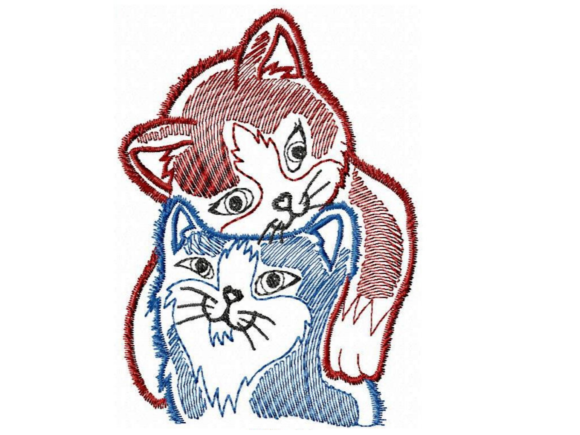
Opening Valentine’s Cats for the first time, I felt that familiar little lift — the kind you get when a design just *gets* it. It’s not overly cutesy or saccharine; it’s warm, affectionate, and unmistakably feline. Two cats face each other, paws gently touching or tails looping into soft hearts — no forced romance, just quiet companionship with a wink. The composition balances negative space and detail beautifully: clean outlines, subtle curves in the ears and whiskers, and just enough internal stitching to suggest expression without crowding. As a machine embroidery design, it leans into satin stitch definition for contours and gentle fill stitch for bodies — not too dense, not too sparse. It reads well at 3.5–4 inches wide, which makes it ideal for a centered chest placement on a sweatshirt or a bold front panel on a tote bag.
A Real Project Test: That Custom Tote Bag for the Local Cat Café
Last week, I prepped Valentine’s Cats for a small-batch order: 12 canvas tote bags for a neighborhood cat café’s Valentine’s pop-up. These weren’t generic gifts — they were branded merchandise meant to feel handmade, intentional, and joyful. I chose medium-weight natural canvas (tight weave, low stretch) with tear-away + light cut-away stabilizer. On the first test run, the design stitched cleanly — no thread breaks, no puckering, and the heart-shaped tail loops held their shape. Customers loved how the cats “looked like real cats who’d chosen each other,” not cartoon props. That nuance matters: Valentine’s Cats lands as sincere, not gimmicky. It elevated the tote from functional to giftable — the kind people hang on their kitchen door or carry to the farmers’ market all year.
Where It Shines (and Where to Pause)
Valentine’s Cats excels in projects where warmth and personality drive purchase decisions:
- Custom apparel: Works beautifully on crewneck sweatshirts, relaxed-fit tees, and denim jackets — especially when placed left-chest or centered on the back.
- Tote bag design: Its balanced width and clear silhouette scale well on both standard and oversized bags without distortion.
- Baby embroidery: Softened with pastel thread colors and stitched on organic cotton onesies or burp cloths, it reads as tender, not loud.
- Holiday embroidery: Stands apart from clichéd Cupid motifs — perfect for pet lovers who want Valentine’s Day to feel personal, not performative.
- Embroidered patch: Clean edges and moderate stitch density mean it presses flat and sews neatly onto backpacks or denim vests.
That said, proceed thoughtfully with:
- Thin or stretchy fabric: Like lightweight knits or rayon blends — use firm cut-away stabilizer and consider reducing top tension slightly to prevent distortion.
- Dark fabric: The design relies on contrast. Test thread colors carefully — a warm cream or heather grey often reads clearer than stark white on navy or charcoal.
- Curved surfaces: Caps or beanies require re-digitizing or careful hooping — the current layout assumes a flat plane. Don’t force it onto a crown without testing.
- Frequent-wash items: Like tea towels or baby blankets — confirm stitch density supports durability. If threads feel thin in the fill areas, add a second pass or choose heavier weight thread.
Design Integrity Meets Commercial Reality
What sets Valentine’s Cats apart isn’t just charm — it’s coherence. As a digital embroidery file, it supports brand consistency: whether you’re an Etsy seller listing handmade products or a boutique embroidering staff aprons, this design reinforces a tone of quiet joy and authenticity. It doesn’t scream — it invites. That builds customer trust. Buyers recognize intentionality in the spacing, the balance of line and fill, the way the cats’ eyes align just so. It feels like something a designer made *for people*, not just for machines.
I’ve seen too many “cute cat” embroidery files fall flat on finished products — blurry details, overcrowded hearts, or proportions that shrink into blobs. Valentine’s Cats avoids those traps. Its visual clarity holds up in printable mockups and digital previews, which matters if you’re selling the design itself or marketing finished goods online. And because it’s not tied to a specific holiday date or trend, it transitions smoothly into spring collections or year-round pet-themed lines.
Practical Notes Every Designer Should Run Through
Before stitching your first Valentine’s Cats project, do these six things:
- Test on scrap fabric — same type and weight as your final item, with the exact stabilizer and thread you’ll use.
- Check thread color contrast on both light and dark backgrounds. Print a black-and-white mockup to assess value separation.
- Review stitch density — especially around the heart shapes and inner ear curves. Overly dense fills can stiffen delicate fabrics.
- Confirm hoop size — this design likely fits comfortably in a 4x4 or 5x7 hoop, but verify before loading.
- Inspect small details under magnification: whiskers, paw pads, and tail tips should be legible, not lost in under-stitching.
- Clarify licensing — if you’re selling finished products or reselling the embroidery file, confirm commercial use rights directly with the source.
Remember: a strong machine embroidery design isn’t just about how it looks on screen — it’s about how it behaves on fabric, how it ages with wear, and how it makes the person receiving it feel. Valentine’s Cats delivers on all three. It’s not just another cats embroidery file. It’s a thoughtful, stitch-ready asset — one that earns its place in your design library, your craft business, and your customers’ everyday lives.