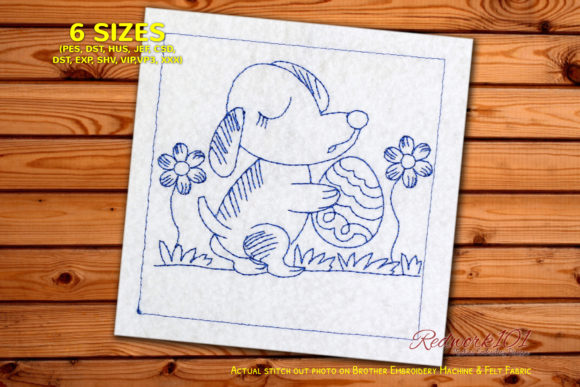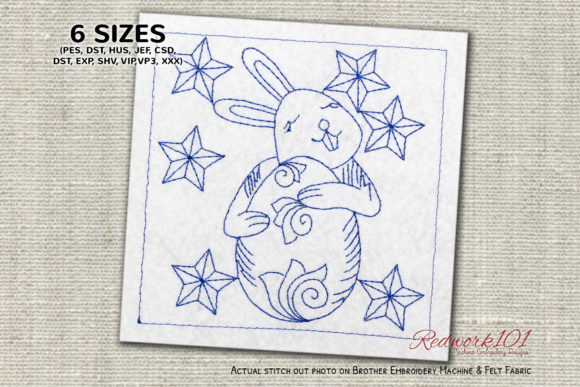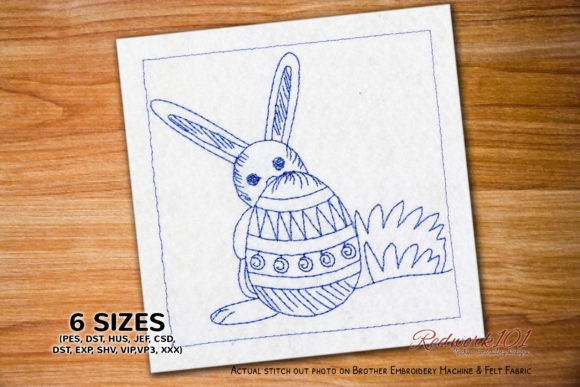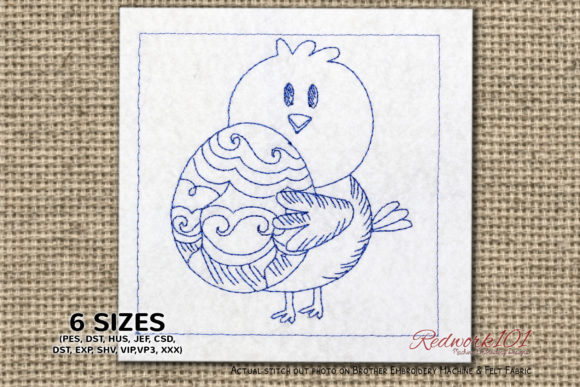
Cute Chick with Easter Egg Redwork
First Impression: Festive, Friendly, and Instantly Recognizable
As an embroidery designer who’s prepped over 200 craft fair booths, I can tell you Cute Chick with Easter Egg Redwork lands exactly where it needs to: cheerful without being cutesy, seasonal without feeling dated, and simple enough to read at three feet—but detailed enough to reward a closer look. It reads as festive, handmade, and approachable, with that classic redwork charm that signals tradition, care, and quiet craftsmanship. No glitter, no gradients—just confident line work and intentional negative space. That’s gold for booth buyers scanning quickly while juggling kids and coffee.
Where It Shines: Craft Fair Product Pairings
This design isn’t one-note—it flexes beautifully across categories. On a natural canvas tote bag? It’s the perfect focal point: bold enough to stand out in a crowded aisle but soft enough to feel personal. As apron embroidery, placed just above the pocket or centered on the bib, it adds warmth and thematic cohesion—especially beside matching tea towel sets. Speaking of tea towel embroidery: linen or cotton towels with this design stitched in brick-red or burnt sienna thread pop against cream or oatmeal backgrounds, and the clean lines hold up even on textured weaves.
For smaller items, Cute Chick with Easter Egg Redwork excels as an embroidered patch—ideal for attaching to denim jackets, market bags, or kids’ backpacks. Its compact scale (assuming standard redwork proportions) means it avoids dense stitch areas that snag or pucker. As a stitch-on cap design, it works best on structured front panels—not curved bill seams—so test placement early. And on pillow covers or fabric pouches? It adds giftable polish without overwhelming the item’s function.
Online & Digital Performance: Etsy, Mockups, and Listings
This is where Cute Chick with Easter Egg Redwork quietly outperforms flashier competitors. Its high-contrast line work photographs crisply—even on phone screens. No fine gradients to blur, no tiny lettering to vanish in thumbnail views. That makes it ideal for printable mockups, Etsy seller listings, and social media carousels. Buyers scrolling past your shop will pause because the shape reads instantly: chick + egg = Easter. No decoding required. Plus, its redwork style implies authenticity—something handmade shoppers actively seek in a sea of digital prints.
As a digital embroidery file, it’s highly repeatable for batch production. Minimal color changes, no satin-fill flooding, and predictable stitch density mean consistent results across dozens of tote bags or aprons—critical when you’re stitching 40+ pieces before Saturday morning.
Careful-Use Notes: Protect Your Production Time
Before cutting fabric, check these real-world variables: First, avoid placing Cute Chick with Easter Egg Redwork on ultra-thick fabrics (like heavy denim or quilted caps) unless you’ve tested stabilizer layers—redwork relies on clean line definition, and bulk can distort those delicate curves. Second, skip dark fabric unless you confirm thread contrast; redwork traditionally uses light thread on dark—or vice versa—but low-contrast combos fade visually in person and online. Third, if your version includes the optional Box Stitch, verify whether it’s decorative framing or structural—on curved surfaces like caps or pouch gussets, rigid outer boxes can pucker.
Also: tiny details matter. If the chick’s eye or egg speckles are under 2mm, they’ll vanish on tea towels or small pouches. Always test at your smallest intended size—especially for patches under 3 inches tall. And remember: “The color of the outer box is a different color in most of the designs unless it is part of the design itself, you can skip t”—so treat that box as removable unless it enhances your brand aesthetic.
Booth Impact: Attention, Value, and Handmade Credibility
In a live craft fair setting, Cute Chick with Easter Egg Redwork strengthens your display in three ways: First, it creates visual rhythm—pair it with solid-color items in Easter-adjacent tones (sage, butter yellow, dusty rose) and let the embroidery be the punctuation. Second, it elevates perceived value. A plain canvas tote becomes a curated small shop product the moment this design anchors it. Third, it sparks conversation: parents point it out to kids, grandmothers smile at the nostalgia, and fellow makers ask, “Is that hand-drawn?” That’s engagement you can’t buy.
It also supports brand consistency—if your line leans rustic-farmhouse or modern-minimal-Easter, this design bridges both. It doesn’t scream “holiday,” so it won’t feel out of place in April or May. And unlike cartoonish motifs, it photographs well next to your other commercial embroidery offerings, helping customers see you as a cohesive maker—not just a seasonal vendor.
Designer-to-Designer Checklist Before You Stitch
- Test Cute Chick with Easter Egg Redwork on scrap fabric matching your final product—especially for texture and stretch.
- Check thread contrast on your base fabric under both natural and booth lighting.
- Review spacing: ensure the chick and egg have breathing room—no crowding into seams or hems.
- Confirm hoop size compatibility with your machine and product dimensions (e.g., cap frames vs. flat hoops).
- Inspect stitch density—avoid areas where redwork lines double back tightly; they may cause stiffness or shine-through.
- Choose stabilizer wisely: tear-away for stable wovens, cut-away for knits or textured towels.
- Create at least one real mockup—not just a digital render—to assess scale, proportion, and tactile appeal.
- Compare how it looks on multiple fabric colors; a single design can shift mood dramatically between ivory linen and charcoal cotton.
- Verify commercial licensing status—this is a machine embroidery design intended for resale, but always confirm before selling finished products.
Bottom line: Cute Chick with Easter Egg Redwork isn’t just another Easter motif. It’s a thoughtful, versatile, and commercially smart embroidery file—one that supports your craft fair goals, scales across product types, and reinforces your reputation as a detail-oriented, customer-aware maker. Stitch it right, and it won’t just sell—it’ll invite return visits, taggable moments, and word-of-mouth buzz long after the fair ends.